3,500m Above Sea Level · Ladakh, India
Leh-Ladakh
Land of High Passes & Endless Adventure
Complete guide to Leh-Ladakh — Pangong Lake, Nubra Valley, Khardung La, ancient monasteries, motorcycle touring, trekking, rafting & more.
Top Attractions
View all
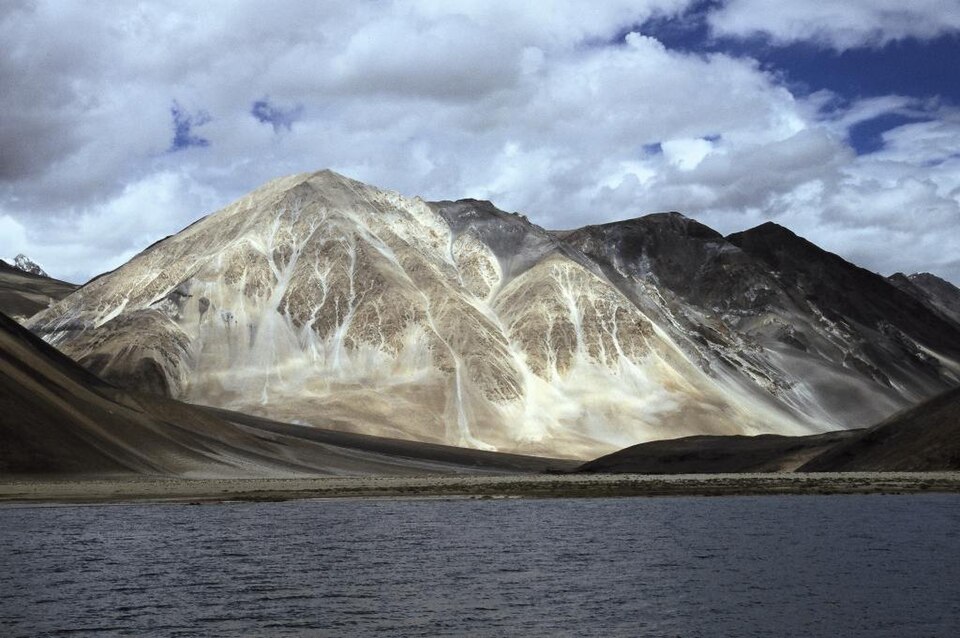
Pangong Tso
The mesmerising 134 km lake that changes colour through the day
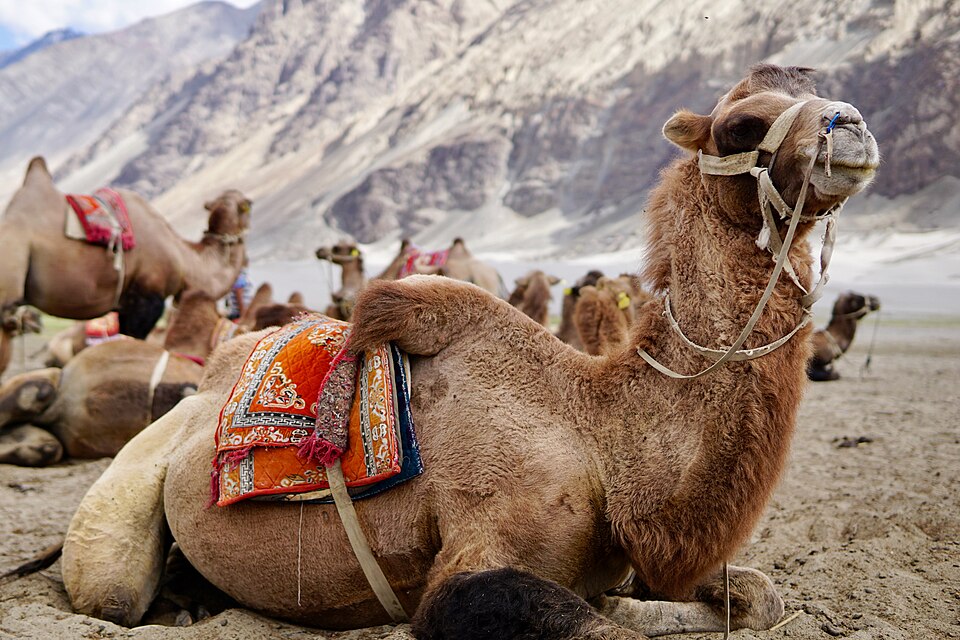
Nubra Valley & Hunder Sand Dunes
Cold desert sand dunes with double-humped Bactrian camels at 3,048m
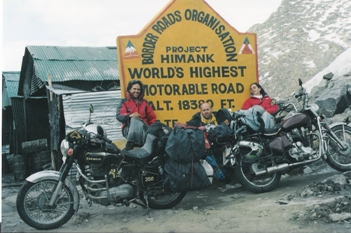
Khardung La Pass
One of the highest motorable passes in the world at 5,359m (17,582 ft)
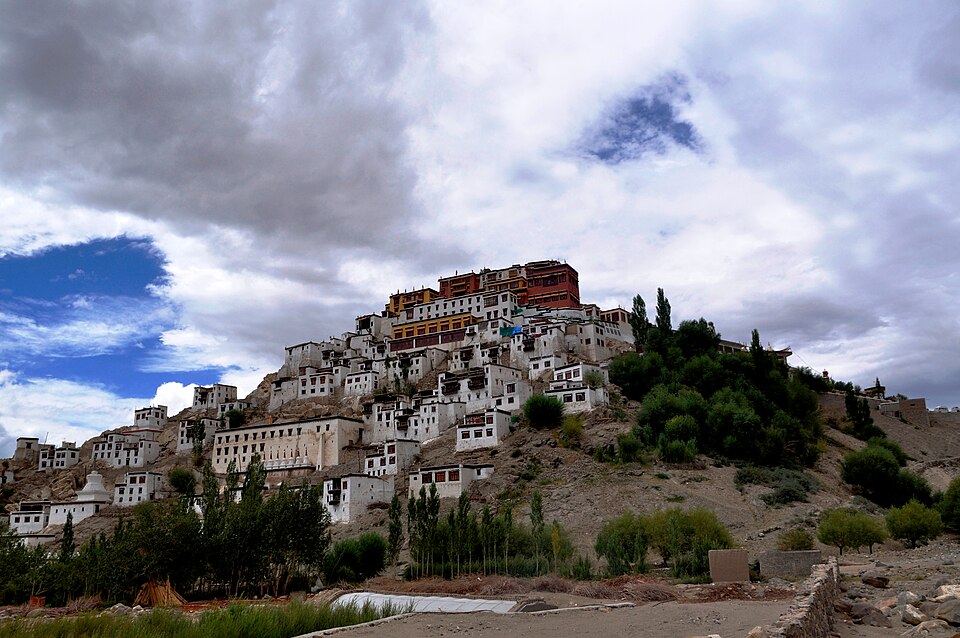
Thiksey Monastery
The "Mini Potala" — a 12-storey gompa perched on a hilltop
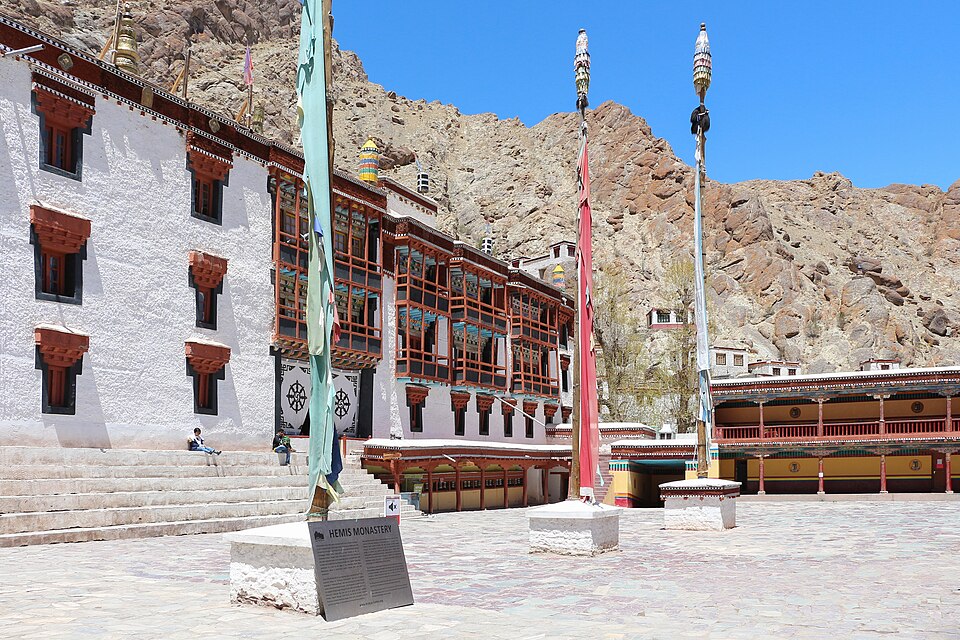
Hemis Monastery
Ladakh's largest and wealthiest monastery — home to the famous Hemis Festival
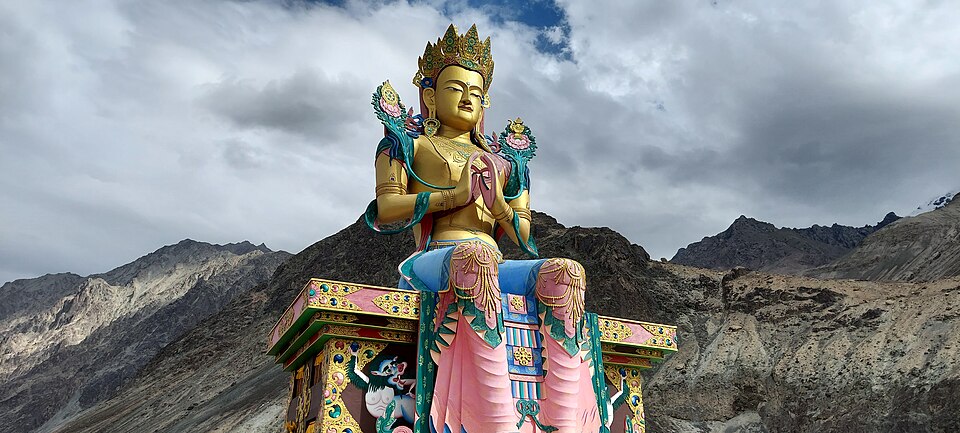
Diskit Monastery & Maitreya Buddha
Nubra Valley's 14th-century monastery with a towering 32m Buddha statue
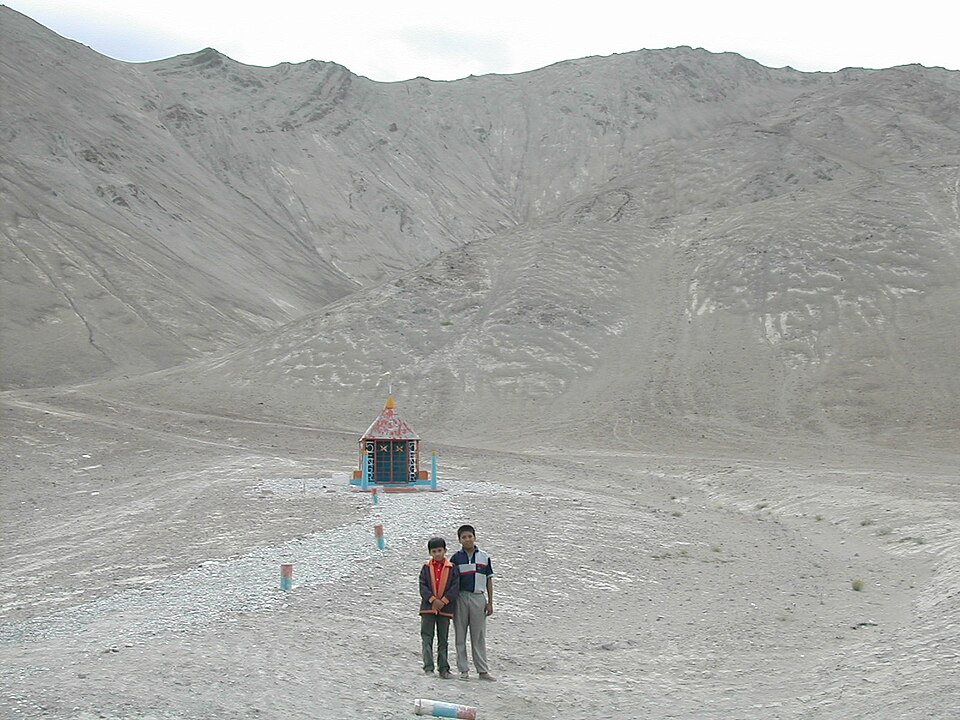
Magnetic Hill
The gravity-defying hill where vehicles appear to roll uphill on their own
More Places
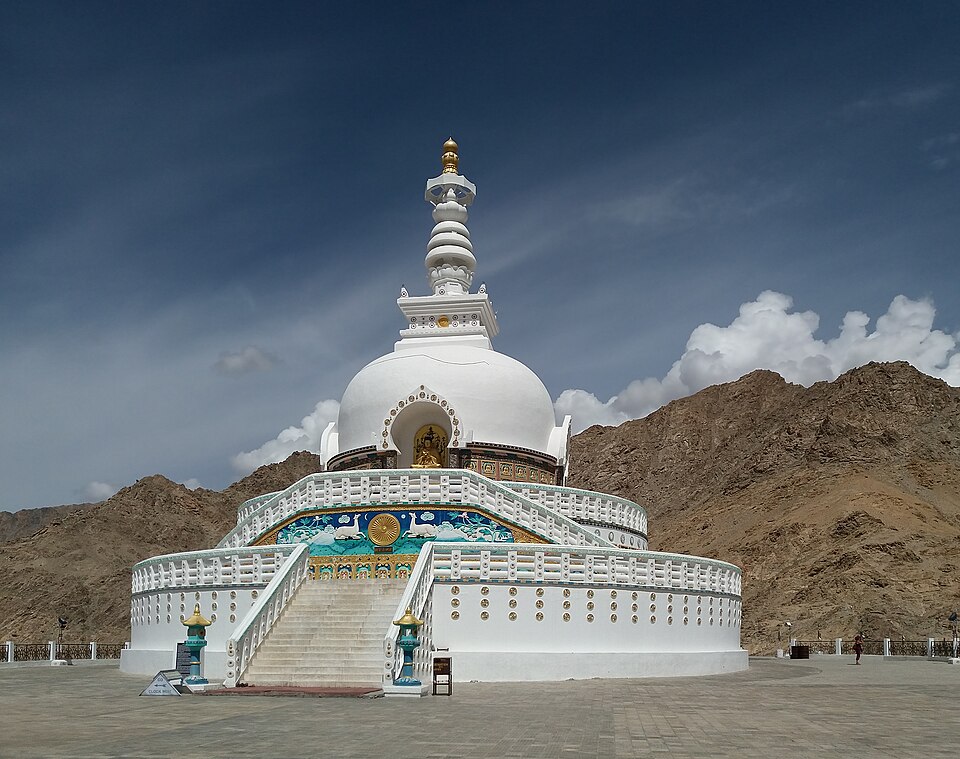
Shanti Stupa
Stunning white-domed Buddhist peace stupa with panoramic views of Leh
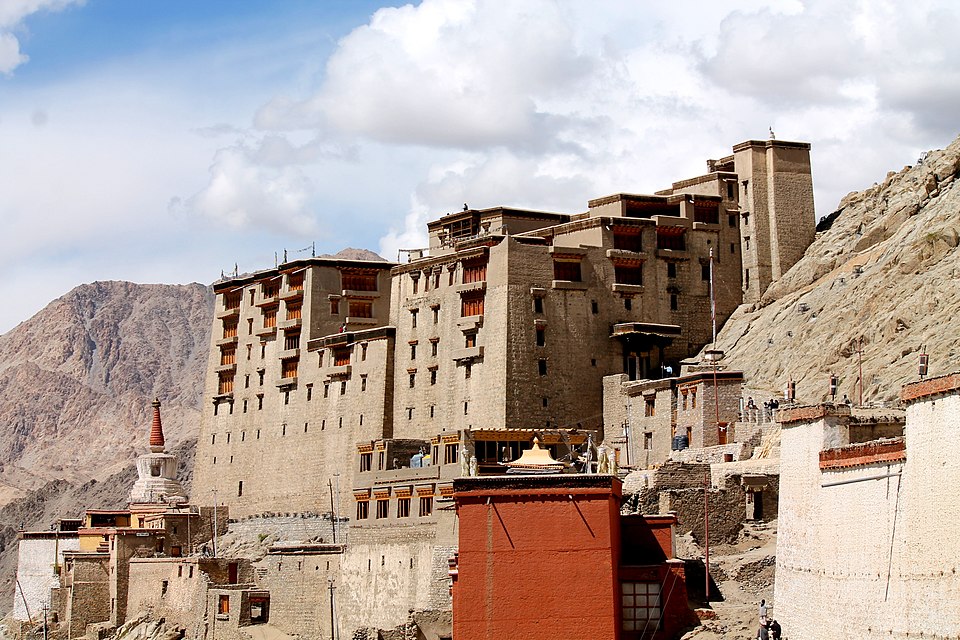
Leh Palace
The 17th-century royal palace overlooking Leh — Ladakh's own Potala
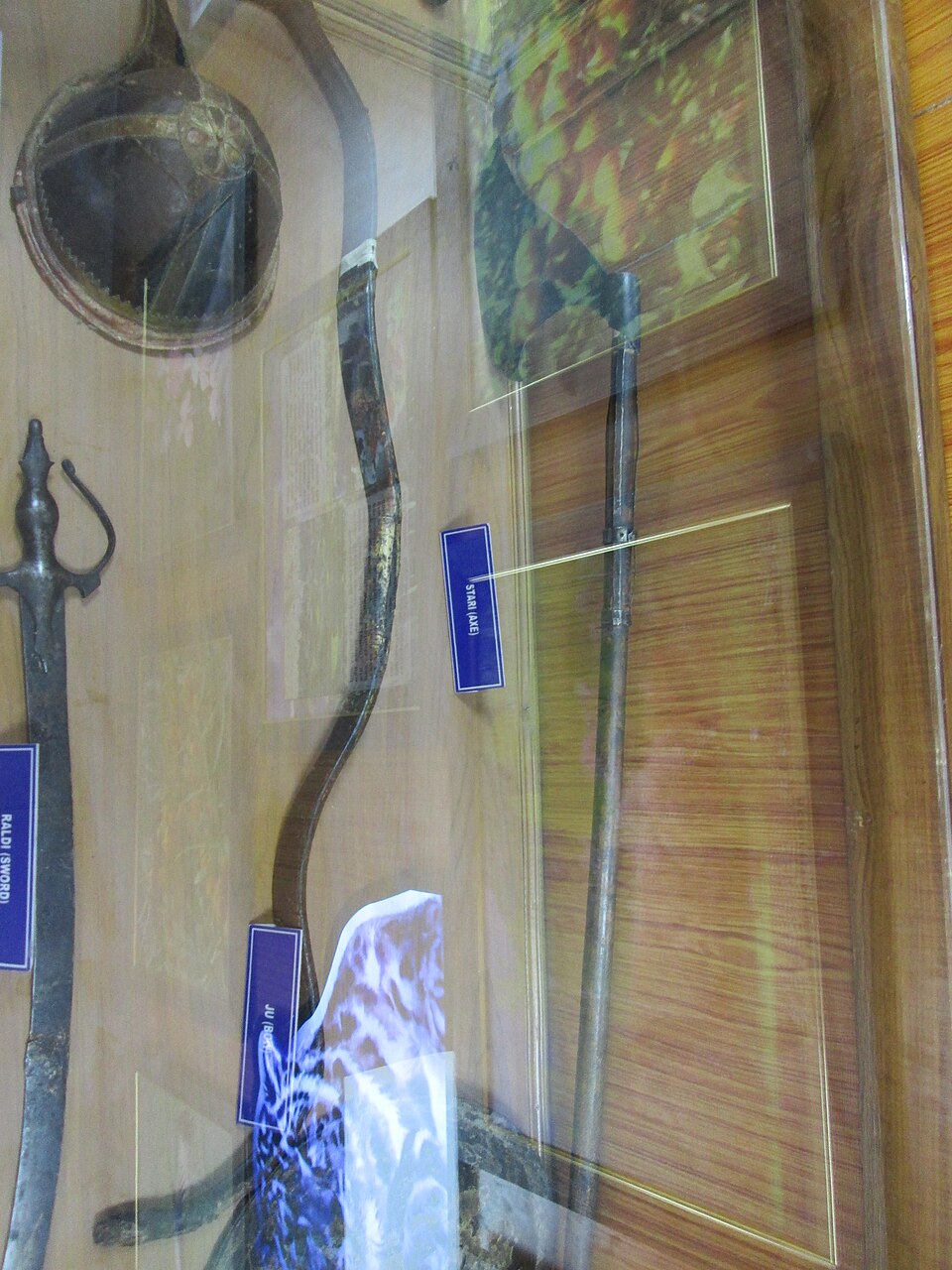
Hall of Fame Museum
Indian Army museum honouring the heroes of Ladakh's battles
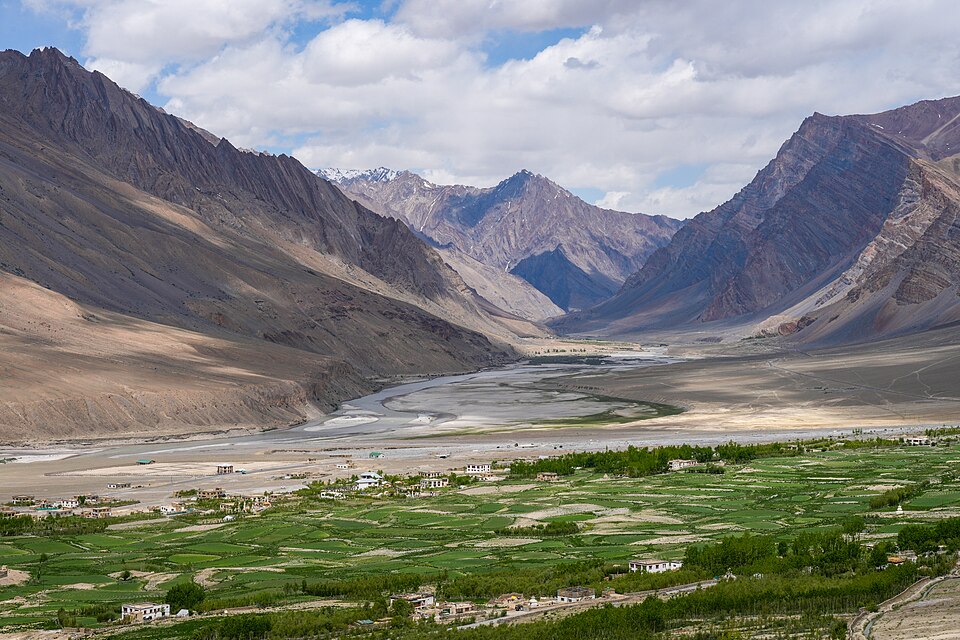
Zanskar Valley
One of the most remote inhabited valleys in the Himalayas
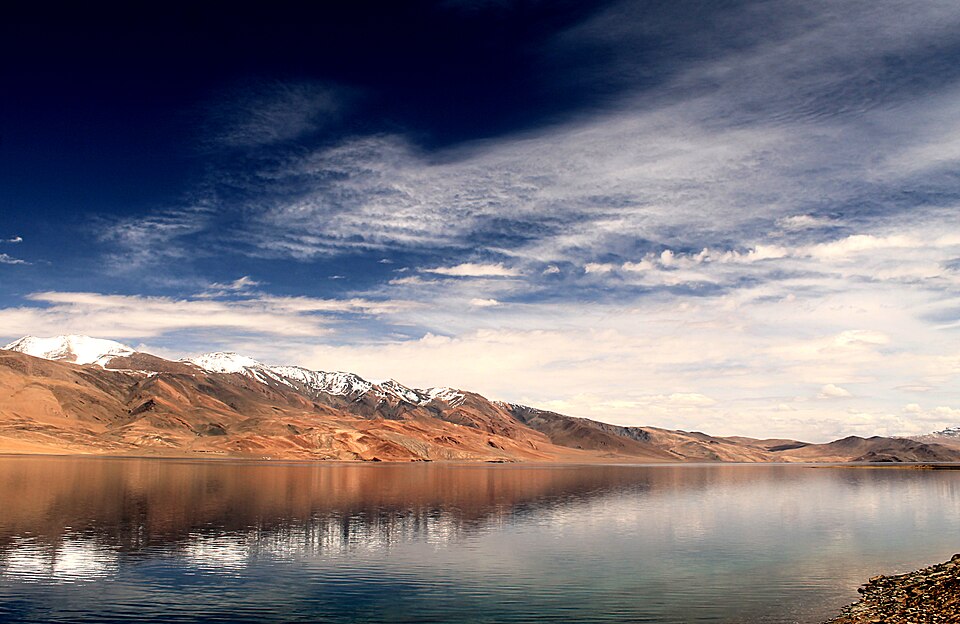
Tso Moriri Lake
The sacred high-altitude lake at 4,522m — wilder and quieter than Pangong
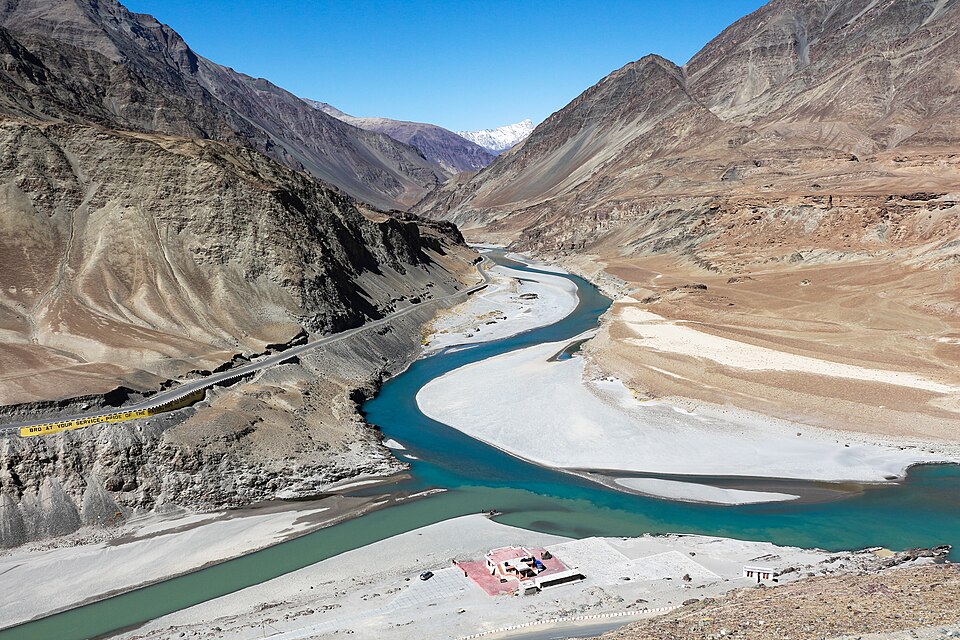
Confluence of Indus & Zanskar Rivers
Where two rivers of different colours merge in a stunning natural spectacle

3,500m Above Sea Level
Leh-Ladakh
Land of High Passes & Endless Adventure
Complete guide to Leh-Ladakh — Pangong Lake, Nubra Valley, Khardung La, ancient monasteries, motorcycle touring, trekking, rafting & more.

Pangong Tso
The mesmerising 134 km lake that changes colour through the day
Pangong Tso
Pangong Tso (Pangong Lake) is the jewel of Ladakh — a 134 km long endorheic lake stretching from India into Tibet at an altitude of 4,350 metres. The lake is famous for its ever-changing colours, shifting from deep azure to turquoise to emerald green depending on the time of day and angle of sunlight. Despite being a saltwater lake, it freezes completely in winter. The lake gained massive popularity after the Bollywood film "3 Idiots" was shot here. The drive from Leh (160 km, 5-6 hours) crosses Chang La pass (5,360m), one of the highest motorable passes in the world.
Full day trip from Leh (or overnight camp)
Free (Inner Line Permit required — ₹600 per person)
High (Jun–Sep), Low (Oct–Apr)
May to September. June–July for vibrant colours.
Open 24 hours (best visited during daylight)
Highlights
Pangong Tso
Photos


Nubra Valley & Hunder Sand Dunes
Cold desert sand dunes with double-humped Bactrian camels at 3,048m
Nubra Valley & Hunder Sand Dunes
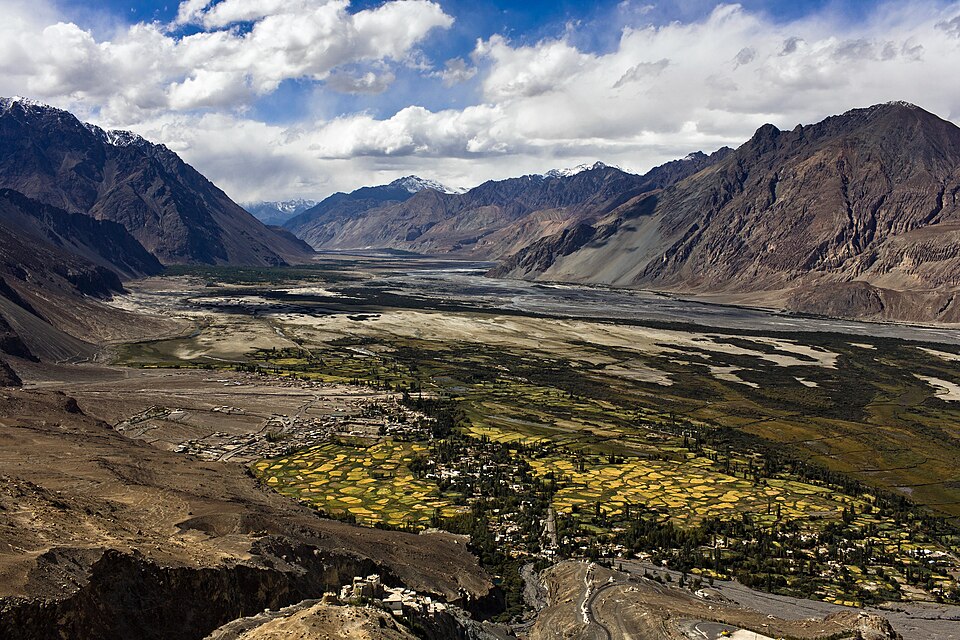
Nubra Valley — the "Valley of Flowers" — is a surreal high-altitude cold desert accessible via the Khardung La pass. The Hunder sand dunes are its most iconic feature: vast white sand dunes flanked by the Karakoram range where rare double-humped Bactrian camels roam. Once a major stop on the ancient Silk Route between India and Central Asia, the valley today offers monasteries, hot springs at Panamik, and some of the most dramatic landscapes in the Himalayas. The contrast of sand dunes, snow-capped peaks, and green oases is unlike anywhere else on Earth.
2 days recommended (overnight stay)
Free (Inner Line Permit required — ₹600). Camel ride: ₹300–500
High (Jul–Aug), Moderate otherwise
June to September for best weather and all facilities open
Accessible May–October (road may close in winter)
Highlights
Nubra Valley & Hunder Sand Dunes
Photos


Khardung La Pass
One of the highest motorable passes in the world at 5,359m (17,582 ft)
Khardung La Pass
Khardung La is the gateway to Nubra Valley and one of the highest motorable mountain passes in the world at 5,359 metres (17,582 feet). The pass is a rite of passage for every motorcyclist and traveller visiting Ladakh. At the top, prayer flags flutter in the fierce wind, and on clear days the views of the Karakoram and Ladakh ranges are breathtaking. The road from Leh (39 km) climbs relentlessly through switchbacks. Altitude sickness is common here — acclimatize in Leh for at least 2 days before attempting this pass.
30–45 minutes at the pass (don't stay long — altitude)
Free (part of Nubra Valley Inner Line Permit)
High
June to September. Go early morning for clear skies.
Road open ~May to October (weather dependent)
Highlights
Khardung La Pass
Photos


Thiksey Monastery
The "Mini Potala" — a 12-storey gompa perched on a hilltop
Thiksey Monastery
Thiksey Monastery is a stunning 12-storey complex of the Gelug (Yellow Hat) sect of Tibetan Buddhism, dramatically perched on a hilltop 19 km from Leh. Often called the "Mini Potala" for its resemblance to the Potala Palace in Lhasa, it houses approximately 120 monks. The monastery contains a magnificent 15-metre-high Maitreya (future Buddha) statue — the largest in Ladakh — along with stupas, thangka paintings, wall frescoes, swords, and a rich collection of Buddhist art. The early morning prayer ceremony (6:30 AM) is a deeply moving experience open to visitors.
1.5–2 hours
₹50
Moderate
Early morning for prayer ceremony and golden light
6:00 AM – 6:00 PM daily. Morning prayers: 6:30 AM.
Highlights
Thiksey Monastery
Photos


Hemis Monastery
Ladakh's largest and wealthiest monastery — home to the famous Hemis Festival
Hemis Monastery
Founded in 1630 by Stagsang Raspa Nawang Gyatso, Hemis is the largest and wealthiest monastery in Ladakh, belonging to the Drukpa lineage of Buddhism. Located 45 km south of Leh, it is set in a dramatic gorge and houses an extraordinary collection of gold and copper statues, sacred thangka paintings (including one believed to be the largest in existence), and precious gem-studded stupas. The monastery is famous for the annual Hemis Festival (June/July), a spectacular two-day masked dance festival celebrating Guru Padmasambhava's birthday, attracting visitors from around the world.
1.5–2 hours
₹50
Very High during festival, Low otherwise
June/July for Hemis Festival. Year-round otherwise.
8:00 AM – 1:00 PM, 2:00 PM – 6:00 PM
Highlights
Hemis Monastery
Photos


Diskit Monastery & Maitreya Buddha
Nubra Valley's 14th-century monastery with a towering 32m Buddha statue
Diskit Monastery & Maitreya Buddha
Diskit Monastery is the oldest and largest Buddhist monastery in Nubra Valley, founded in the 14th century. Perched on a hillside above the Shyok River, it belongs to the Gelugpa (Yellow Hat) sect. The monastery's modern landmark is the spectacular 32-metre (106-foot) Maitreya Buddha statue inaugurated by the Dalai Lama in 2010, which faces down the Shyok River toward Pakistan — symbolizing protection against future wars. The statue is visible for miles across the valley. From the monastery terrace, the panoramic views of Nubra Valley, the sand dunes, and the distant Karakoram are unforgettable.
1–1.5 hours
₹30
Moderate
Morning for soft light on the Buddha statue
6:00 AM – 6:00 PM daily
Highlights
Diskit Monastery & Maitreya Buddha
Photos


Magnetic Hill
The gravity-defying hill where vehicles appear to roll uphill on their own
Magnetic Hill
Magnetic Hill is one of Ladakh's most intriguing attractions — a stretch of road on the Leh-Kargil highway where vehicles in neutral gear appear to roll uphill, seemingly defying gravity. Scientists attribute this to an optical illusion created by the surrounding terrain, where the layout of the hills creates a false impression of the slope's direction. Whether science or magic, the experience is genuinely surreal. The site is marked by a yellow signboard from the Indian Army. Adjacent is a beautiful Gurudwara Pathar Sahib, a Sikh temple built into the mountainside.
15–30 minutes
Free
Moderate
Anytime during daylight — best combined with other trips
Open 24 hours (daylight recommended)
Highlights
Magnetic Hill
Photos


Shanti Stupa
Stunning white-domed Buddhist peace stupa with panoramic views of Leh
Shanti Stupa
Shanti Stupa is a white-domed Buddhist stupa on a hilltop in Chanspa, Leh, built in 1991 by Japanese Buddhist Bhikshu Gyomyo Nakamura to promote world peace and commemorate 2,500 years of Buddhism. The stupa was inaugurated by the 14th Dalai Lama. It contains relics of the Buddha at its base, enshrined by the Dalai Lama. Reaching the stupa requires climbing 500 steps (or driving up), but the reward is one of the best panoramic views in Ladakh — 360-degree views of the Leh valley, Stok Kangri, and the surrounding Himalayan and Karakoram ranges. Sunset from here is magical.
1–1.5 hours
Free
High at sunset, Low otherwise
Sunset for the most spectacular views and photography
5:00 AM – 9:00 PM daily
Highlights
Shanti Stupa
Photos


Leh Palace
The 17th-century royal palace overlooking Leh — Ladakh's own Potala
Leh Palace
Leh Palace (Lachen Palkar) was the royal palace of the Namgyal dynasty, built in the 17th century by King Sengge Namgyal. This nine-storey structure was modeled after the Potala Palace in Lhasa (and was in fact built before the current Potala). Now maintained by the Archaeological Survey of India, the palace offers stunning panoramic views of Leh town, the Ladakh range, and Stok Kangri from its rooftop. The interior, though partially in ruins, contains wall paintings, a small museum, and a Buddhist prayer room. The palace is illuminated beautifully at night.
1–1.5 hours
₹25 (Indians), ₹100 (Foreigners)
Moderate
Morning for photography, evening for illumination views from below
7:00 AM – 4:00 PM daily
Highlights
Leh Palace
Photos


Hall of Fame Museum
Indian Army museum honouring the heroes of Ladakh's battles
Hall of Fame Museum
The Hall of Fame is a museum in Leh constructed by the Indian Army to honour the soldiers who fought and gave their lives in the Indo-Pakistan wars, particularly the Kargil War of 1999 and Operation Meghdoot in Siachen. The museum showcases weapons, war memorabilia, letters from soldiers, photographs, and captured enemy equipment. One of the most moving sections displays personal letters written by soldiers to their families. The museum also documents the extreme conditions of warfare at altitudes above 20,000 feet. It is one of the most visited attractions in Leh and a deeply emotional experience.
1–2 hours
₹50
High
Morning — allow 1-2 hours to read everything
9:00 AM – 1:00 PM, 2:00 PM – 7:00 PM daily
Highlights
Hall of Fame Museum
Photos


Zanskar Valley
One of the most remote inhabited valleys in the Himalayas
Zanskar Valley
Zanskar is one of the most remote and spectacular valleys in the Himalayas, accessible only during summer via the Pensi La pass (4,400m) or in winter via the legendary frozen Zanskar River (Chadar Trek). The valley is home to ancient Buddhist monasteries (Phuktal, Karsha, Stongde), dramatic gorges, pristine rivers, and some of the most isolated villages in India. The Zanskar River is also famous for Grade III-IV white-water rafting. The valley's extreme isolation has preserved a way of life that has barely changed in centuries.
3–5 days recommended
Free (permits may be required for some areas)
Very Low
July–August for road access, January–February for Chadar Trek
Accessible June–October by road, Jan–Feb by Chadar Trek
Highlights
Zanskar Valley
Photos


Tso Moriri Lake
The sacred high-altitude lake at 4,522m — wilder and quieter than Pangong
Tso Moriri Lake
Tso Moriri is a stunning high-altitude lake at 4,522 metres in the Changthang Plateau of eastern Ladakh. Less commercialized than Pangong, it offers a more pristine and wild experience. The 28 km long lake is a Ramsar Wetland Site, home to migratory birds including bar-headed geese, Brahminy ducks, and the rare black-necked crane. The shores are inhabited by Changpa nomads who herd pashmina goats — the source of the world's finest cashmere wool. The surrounding landscape of barren mountains reflected in the crystal-clear water is hauntingly beautiful.
Full day trip from Leh or overnight camp
Free (Inner Line Permit required — ₹600)
Low
June–September. July–August for migratory birds.
Open 24 hours (accessible May–October by road)
Highlights
Tso Moriri Lake
Photos


Confluence of Indus & Zanskar Rivers
Where two rivers of different colours merge in a stunning natural spectacle
Confluence of Indus & Zanskar Rivers
At Nimmu, about 35 km west of Leh on the Srinagar-Leh highway, the muddy brown Zanskar River meets the clear turquoise Indus River in a striking visual display. The two waters flow side by side for some distance before finally merging, creating a vivid two-tone effect that is one of the most photographed natural sights in Ladakh. Rafting trips on the Zanskar often end at this confluence point. The viewpoint is easily accessible from the highway, making it a perfect stop on the way to or from Kargil, Lamayuru, or Alchi.
15–30 minutes
Free
Moderate
Summer for most vivid colour contrast
Open 24 hours (daylight recommended)
Highlights
Confluence of Indus & Zanskar Rivers
Photos
